
Screen printing vs heat press is the first real decision on most custom shirt orders, and the honest answer is that each one wins in a different situation. Screen printing wins on cost per shirt once you pass about two dozen pieces, on durability, and on color accuracy. A heat press wins on tiny quantities, one-off names and numbers, and full-color photos on a handful of shirts. This guide lays out the real differences the way we explain them to teams, schools and businesses who walk into our shop in Deerfield Beach, so you can pick the right method before you spend money.
Not sure which method fits your order?
Send the design and a rough quantity. We will tell you which process makes sense and price it the same business day. 24 piece minimum on screen printing, no setup fees.
The short version
| Screen printing | Heat press (vinyl or transfer) | |
|---|---|---|
| Best quantity | 24 pieces and up; cheapest per shirt at 100+ | 1 to roughly 20 pieces |
| Cost per shirt | Falls fast with quantity | Flat; the 200th shirt costs the same as the first |
| Durability | Ink bonds into the fabric; outlasts the shirt | Sits on top; can crack, peel or fade over 25 to 50 washes |
| Feel | Soft, especially with water-based or thin plastisol | Noticeable layer, stiffer on large designs |
| Color | Pantone matched spot colors; each color is a screen | Full color photos are easy; exact brand colors are harder |
| Personalization | Same design on every shirt | Names and numbers, one at a time |
| Turnaround | 7 to 10 business days standard, rush available | Same day possible for a few pieces |
How screen printing works
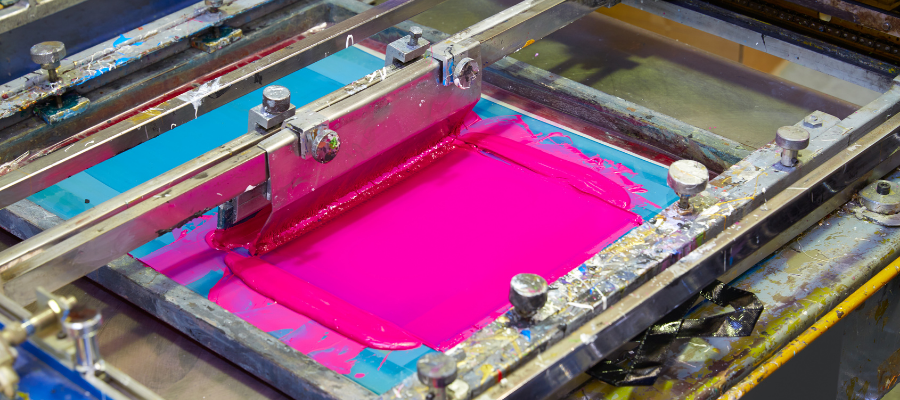
Screen printing pushes ink through a fine mesh stencil directly onto the shirt, one color per screen. On a dark garment a white underbase goes down first so the top colors stay bright. Once the screens are registered on press, shirts come off at several hundred an hour, which is exactly why the per-shirt price drops as the run gets longer: the setup is spread across more pieces. We run three ROQ automatic presses, so a 48-piece job and a 2,000-piece job use the same equipment and get the same print quality. Ink is cured through a conveyor dryer at around 320°F, and the result is part of the fabric rather than a layer on top of it.
The trade-off is that every color costs a screen, and every shirt in the run gets the same design. Screen printing is not built for one-offs or for shirts that each need a different name.
How a heat press works
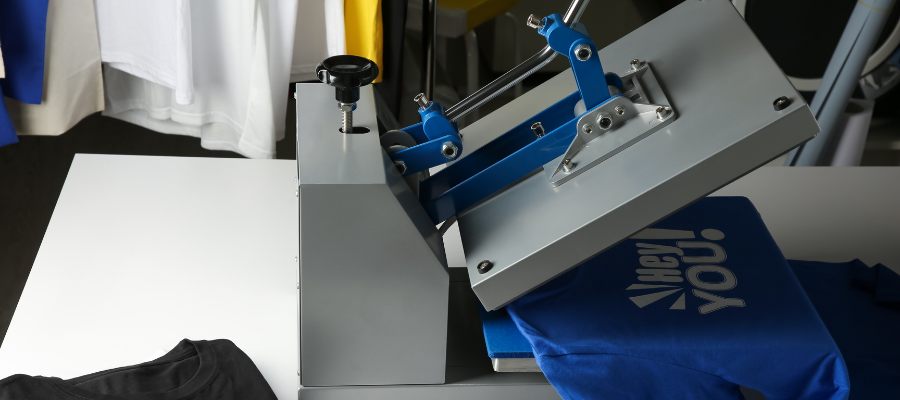
A heat press uses temperature and pressure to bond a pre-made design to the shirt. The design can be heat transfer vinyl (HTV) cut from colored sheets, a printed transfer (direct-to-film, or DTF, is the modern version), or a sublimation print on polyester. There is no screen setup, so the first shirt costs about the same as the hundredth. That makes a heat press ideal for a single team captain shirt, numbered jerseys, a short run of event staff tees, or a full-color photo on a couple of pieces.
The trade-off is that the design sits on the surface. Good DTF transfers hold up well, but vinyl and cheaper transfers crack and peel over time, especially on large solid areas, and the hand feel is heavier than ink. Pressing is also one shirt at a time, so the labor never gets cheaper.
Cost: where the lines cross
This is the question behind most of the searches that land on this page, so here is the plain math. A heat-pressed shirt has a roughly flat decoration cost, usually several dollars per piece for a one-color vinyl logo and more for a full-color transfer. A screen-printed shirt carries the screen setup across the run. At 12 pieces the heat press is clearly cheaper. Somewhere around 24 pieces the two meet, which is why our screen printing minimum is 24. By 72 pieces a one-color screen print is under two dollars per print on our contract rate card, and by 250 pieces it is near a dollar. No heat press process gets anywhere close at that volume.
Two things change that picture. More ink colors mean more screens, so a six-color design needs a bigger run to pay off than a one-color design. And if you need every shirt personalized, screen printing is out regardless of quantity; the answer there is screen print the shared logo and heat press the individual names, which we do routinely for sports teams.
Durability and feel
Plastisol screen printing, cured correctly, will outlast the garment. The ink is fused into the fibers and flexes with the fabric. Heat transfer vinyl is a solid film glued to the surface, and solid film eventually cracks at the fold lines and lifts at the edges; most buyers notice it between 25 and 50 washes. DTF transfers are more flexible than vinyl and last considerably longer, but they are still a layer. For staff uniforms, school spirit wear, gym shirts and anything that gets washed weekly, screen printing is the durable choice. For a one-weekend event shirt, nobody will ever wash it enough for the difference to matter.
Feel follows the same logic. A small left-chest logo feels fine either way. A full-front design in vinyl feels like wearing a sticker. The same design screen printed, especially with a soft-hand additive or water-based ink, feels like the shirt.
Color accuracy and design limits

If your brand has a specific Pantone, screen printing matches it. We mix ink to the swatch in house, and the same mix prints the same way on the reorder. Vinyl comes in whatever colors the sheet manufacturer makes, and printed transfers are CMYK approximations. On the other hand, a photograph or a gradient-heavy design on 15 shirts is a transfer job; reproducing that in screen printing means simulated process separations that only pay off on larger runs.
Fine detail favors transfers at low volume and screen printing at high volume. Specialty finishes like puff ink, metallic and glow are screen printing only.
Which one should you choose?
Pick screen printing when you have 24 or more shirts, the design is the same on every piece, the shirts will be worn and washed repeatedly, or your brand colors matter. That covers most company uniforms, school and church shirts, event tees for 50 or more people, and anything you plan to reorder. Our custom screen printing page has the details and the blanks we recommend.
Pick a heat press when you need fewer than two dozen pieces, each shirt is different, you need it today, or the design is a full-color photo on a small run. If you are under our 24 piece minimum we will tell you so and point you toward DTF transfers rather than sell you a process that does not fit.
Not sure which shirt to put either method on? Our best shirts for screen printing list is based on what we actually run, and the price break guide explains why 144 shirts sometimes costs the same as 130.
Frequently asked questions
Is screen printing or heat press cheaper?
Heat press is cheaper under about 20 shirts because there is no setup. Screen printing is cheaper from roughly 24 pieces up, and dramatically cheaper at 100 or more, because the screen setup is spread across the run.
Which lasts longer, screen printing or heat transfer?
Screen printing. Properly cured plastisol ink bonds into the fabric and typically outlasts the shirt. Heat transfer vinyl sits on the surface and tends to crack or peel after 25 to 50 washes; DTF transfers last longer than vinyl but are still a surface layer.
What is the difference between heat press and screen printing in feel?
Screen printed ink becomes part of the fabric and stays soft and flexible. Heat press transfers and vinyl add a layer you can feel, which gets stiffer as the design gets larger.
Can you mix screen printing and heat press on the same shirt?
Yes. The common example is a team jersey: the logo is screen printed on every shirt, then individual names and numbers are heat pressed one at a time.
Is heat transfer vinyl the same as DTF?
No. Vinyl is a cut film in solid colors. DTF is a full-color print on film that is heat pressed onto the shirt. Both use a heat press, but DTF handles photos and multi-color art and is more flexible after application.
What is the minimum for screen printing?
24 pieces at our shop, with no setup fees. Below that we recommend DTF transfers and can quote those too.
Get a quote for your shirts
Tell us the design, the quantity and when you need it. We will recommend the right method and price it the same business day.